What Does Fleet Tracking Mean?
Fleet tracking is a technology that allows businesses to monitor and manage multiple vehicles by using GPS tracking devices and telematics software.
It provides live insights into vehicle locations, movement, and driver behavior. Companies install GPS hardware inside vehicles, which sends location and performance data to cloud-based fleet management platforms.
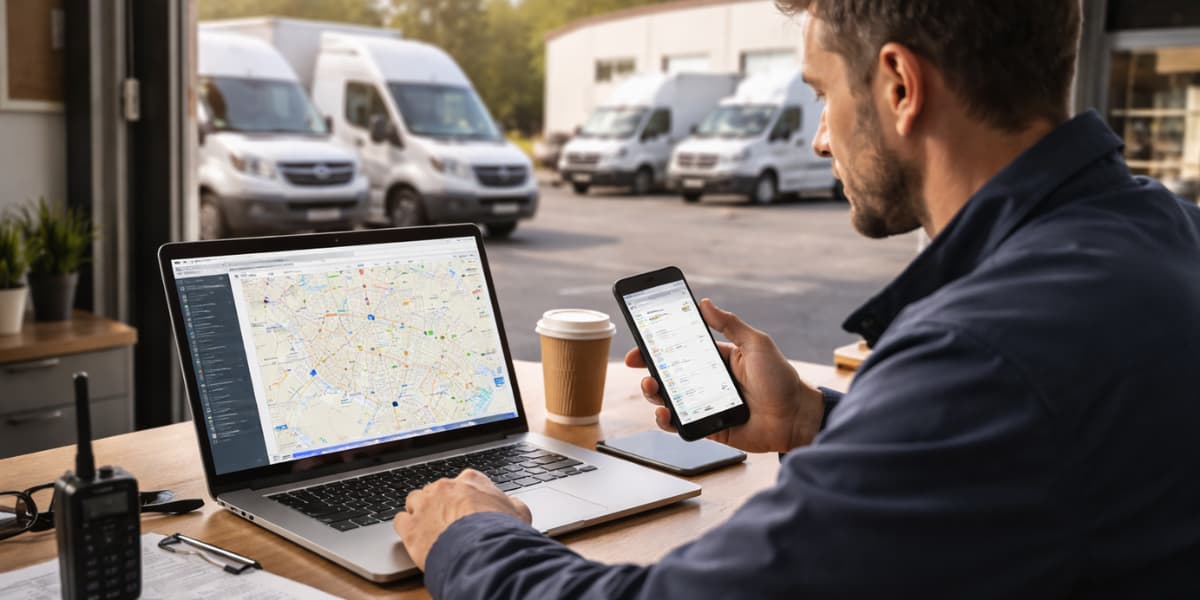
Fleet managers can then view this information through dashboards or mobile apps to supervise operations efficiently. This visibility helps organizations improve logistics planning, enhance accountability, and ensure vehicles operate safely and productively.
How Does Fleet Tracking Work?
Fleet tracking works by installing GPS tracking devices in vehicles that communicate with satellites and transmit location data to a cloud-based software system.
The system processes this data and displays it in real time on a digital fleet management dashboard.
Fleet managers can view routes, monitor driver behavior, and receive alerts for events like speeding or unauthorized stops.
Constant flow of information allows companies to make informed decisions and respond quickly to operational issues.
Components of a Fleet Tracking System
A fleet tracking system consists of different integrated technologies that collect, transmit, and analyze vehicle data.
All components work together to provide real-time visibility into fleet operations.
GPS Tracking Device
GPS tracker installed in a vehicle collects location, speed, and movement data using satellite signals. It records vehicle activity and prepares the information for transmission to the central system.
Cellular or Satellite Communication
After collecting data, the device sends it through cellular or satellite networks to cloud servers. This communication allows the system to update vehicle information continuously.
Cloud-Based Fleet Management Software
Cloud software organizes incoming data into dashboards, reports, and analytics tools. Fleet managers can monitor vehicle locations, driver performance, and operational trends from one centralized platform.
Mobile App and Fleet Dashboard
Mobile apps allow managers to track vehicles remotely and receive instant alerts. Dashboards display maps, route histories, and performance metrics that simplify daily fleet supervision.
Now that we understand the system components, let’s explore why fleet tracking has become essential for modern businesses.
Why Is Fleet Tracking Important for Businesses?
Fleet tracking provides businesses with live visibility into their vehicle operations.
This transparency helps companies manage drivers, reduce inefficiencies, and improve service reliability.
With accurate vehicle data, fleet managers can quickly identify delays, monitor driver behavior, and ensure routes are optimized.
Proactive management helps prevent costly disruptions and operational mistakes.
As a result, industries like logistics, delivery, and transportation rely heavily on fleet tracking to maintain consistent and efficient services.
Benefits of GPS Fleet Tracking
GPS fleet tracking offers many operational advantages that help businesses control costs and improve productivity.
Key Benefits of Fleet Tracking
- Reduces fuel consumption by optimizing routes and minimizing idle time
- Improves driver accountability through behavior monitoring
- Enhances safety with alerts for speeding or harsh driving
- Prevents vehicle theft using geofencing and live location tracking
- Improves dispatch efficiency and delivery accuracy
These benefits explain why organizations adopt telematics systems as a core part of their fleet management strategy.
What Industries Use Fleet Tracking Systems?
Fleet tracking systems are widely used in industries that rely on vehicles, field teams, or transportation networks to deliver services and goods.
By combining GPS tracking with telematics data, businesses gain real-time visibility into vehicle locations, driver behavior, and operational efficiency.
Logistics and Transportation
Logistics and freight companies use fleet tracking to monitor shipments, optimize delivery routes, and manage long-distance transportation networks. Live tracking helps dispatchers coordinate drivers and maintain accurate delivery schedules across large supply chains.
Delivery and E-Commerce
Delivery and e-commerce businesses rely on fleet tracking to manage last-mile delivery operations and ensure timely order fulfillment. GPS monitoring helps companies reduce delays, track driver routes, and improve customer satisfaction through reliable delivery updates.
Construction and Equipment Management
Construction companies use fleet tracking to monitor trucks, heavy machinery, and service vehicles operating across multiple job sites. Which helps project managers track equipment usage, prevent unauthorized vehicle operation, and coordinate resources efficiently.
Utilities and Field Service Operations
Utility providers and field service companies use fleet tracking to dispatch technicians quickly and monitor service vehicles in real time. This visibility allows organizations to improve response times for maintenance work, inspections, and emergency repairs.
Passenger Transportation and Public Transit
Public transportation operators and passenger transport services use fleet tracking to manage buses, shuttles, and service vehicles. The system helps maintain route schedules, monitor driver safety, and provide passengers with more reliable transportation services.
How Much Does Fleet Tracking Cost in 2026?
Fleet tracking costs in 2026 depend on the type of GPS hardware, software features, and the number of vehicles being monitored. Most providers charge an initial device fee along with a monthly subscription for telematics software and data connectivity.
On average, businesses can expect to pay $15 to $40 per vehicle per month for a standard GPS fleet tracking system that includes location monitoring, route history, and driver behavior insights. Several providers operate in this range, and solutions such as Matrack GPS Fleet Tracker are often considered by businesses looking for reliable tracking tools at competitive pricing.
While the exact cost varies by provider and feature set, many organizations recover their investment through fuel savings, improved route efficiency, and better fleet oversight. As telematics technology continues to evolve, fleet tracking systems are becoming more affordable and accessible for businesses of all sizes.
Key Features to Look for in a Fleet Tracking System
Choosing the right fleet tracking platform ensures long-term operational efficiency and accurate monitoring.
Tracking Accuracy
A reliable system should provide real in time GPS updates with minimal delay. High accuracy helps fleet managers respond quickly to route changes or emergencies.
Battery and Hardware
Devices with long battery life reduce maintenance interruptions. Durable hardware ensures consistent data collection in various operating conditions.
Software Interface
Dashboards should present vehicle data clearly and allow easy navigation. Mobile compatibility is essential for managers who monitor fleets remotely.
Alerts and Notifications
Advanced systems offer customizable alerts for speeding, geofencing breaches, or excessive idling. These notifications help managers address issues immediately.
Support and Pricing
Reliable technical support ensures smooth system operation. Flexible pricing plans make it easier for small and growing fleets to adopt telematics technology.
FAQs
Is fleet tracking the same as GPS tracking?
GPS tracking focuses mainly on vehicle location, while fleet tracking includes additional telematics data such as driver behavior, fuel usage, and vehicle diagnostics.
How accurate is fleet tracking?
Most GPS fleet tracking systems provide location accuracy within about 5–10 feet depending on signal conditions and device quality.
Can fleet tracking improve driver safety?
Yes, fleet tracking monitors behaviors like speeding, harsh braking, and excessive idling. Managers can use this information to coach drivers and promote safer driving habits.
Do small businesses need fleet tracking?
Small businesses benefit significantly from fleet tracking because it improves dispatch efficiency and reduces fuel and maintenance costs.
Can fleet tracking prevent vehicle theft?
Yes, geofencing and real-time alerts allow businesses to detect unauthorized vehicle movement and respond quickly.