What Is an ELD?
An electronic logging device is a compliance-focused piece of hardware used in commercial motor vehicles to automatically record driving time. Rather than depending on handwritten paper logs, carriers and drivers can use ELDs to create digital records tied directly to vehicle activity.
Under FMCSA rules, ELD use is linked to drivers who are required to maintain records of duty status. Federal standards also define how these devices must perform, what they must capture, and how compliant products are registered.
More than a tracking tool, an ELD serves as a regulated system for HOS recordkeeping. Its real purpose is to create accurate, engine-connected duty records that can be reviewed during audits or roadside inspections.
How ELD Works
ELDs function by syncing with a commercial vehicle’s engine and automatically collecting operational data. From there, the system converts that information into digital logs that support duty status tracking and HOS compliance.
Engine connection
Direct engine synchronization allows the ELD to capture required data automatically instead of relying only on manual inputs. Because of that connection, an ELD is fundamentally different from a basic mobile app or a standalone GPS device.
Data recording
After connecting to the vehicle, the device records driving-related events in a standardized digital format. In many systems, recorded data also flows into a cloud platform or fleet dashboard for storage, review, and compliance monitoring.
Driver interface
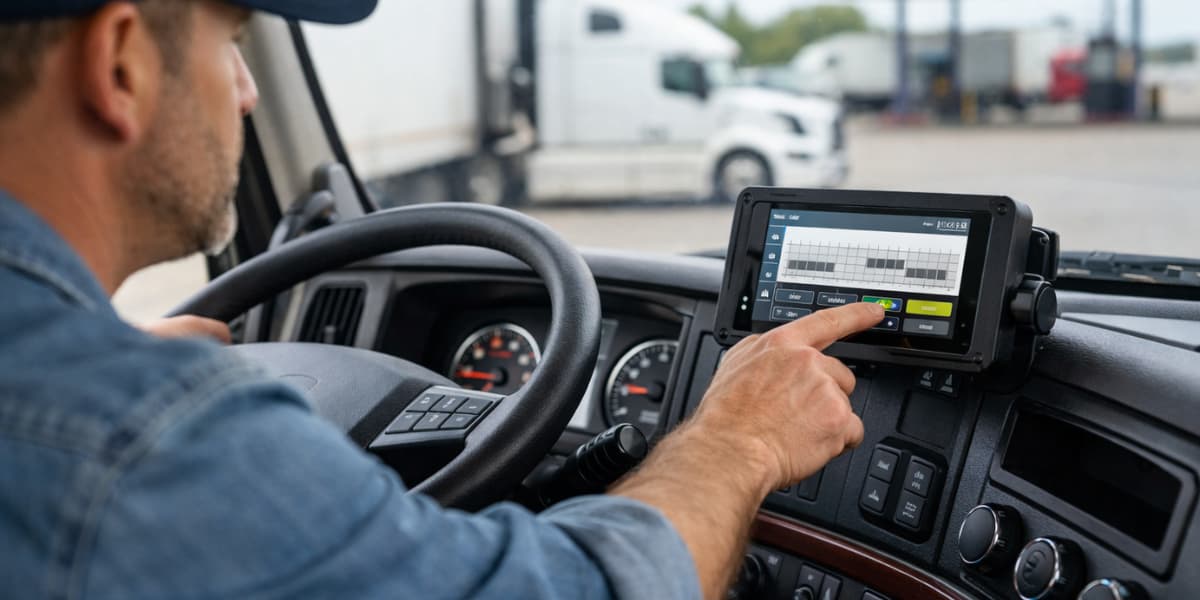
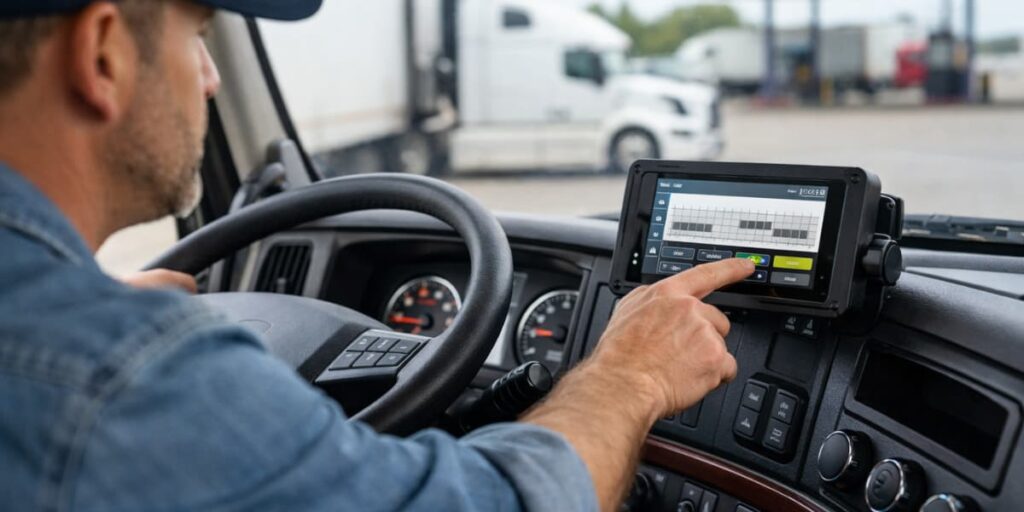
Drivers still play an active role in the logging process because not every status change happens automatically. Through an app or in-cab interface, they may log in, confirm identity, review records, certify logs, and update non-driving duty statuses.
Fleet monitoring
Many ELD solutions go beyond basic logging by giving carriers access to dashboards for violations, duty status visibility, and inspection readiness. As a result, ELD platforms often overlap with telematics and fleet management software, even though compliance remains their core role.
What Data Does an ELD Record?
Designed for HOS logging and compliance, an ELD captures a specific set of operational data points. While exact features vary by provider, the same core records appear across most compliant systems.
ELDs commonly record:
- Date and time of duty-related events
- Engine hours
- Vehicle movement and miles driven
- Geographic location tied to duty events
- Driver identification and user activity
- Duty status records used for HOS and RODS compliance
During a roadside inspection, that data becomes especially important. Inspectors are not simply checking location history; they are reviewing a standardized log of driving and duty activity.
Who Must Use ELDs
Most motor carriers and drivers who are required to keep records of duty status under federal HOS rules must use an ELD. Coverage extends beyond trucking fleets alone and can also apply to commercial bus operations and certain cross-border drivers.
A simple rule of thumb helps here: when a driver is regularly required to maintain RODS, ELD use is usually required as well. That connection is why ELDs are treated primarily as compliance tools rather than optional vehicle technology.
ELD Mandate Exemptions
Not every commercial driver falls under the ELD rule. FMCSA provides several exemptions that remove the requirement in specific operating conditions.
Short-haul and limited-RODS drivers
Drivers who use paper logs no more than 8 days within any 30-day period are generally exempt from the ELD rule. Short-haul drivers using timecard exceptions may also qualify because they are not required to maintain standard RODS in the same way.
Pre-2000 vehicles
Vehicles with engines from before model year 2000 are exempt from the ELD mandate. Older engine systems often do not support the same synchronization capabilities expected from newer vehicles.
Driveaway-towaway operations
Certain driveaway-towaway operations are also exempt when the vehicle being driven is the commodity being delivered. In cases like these, the rule reflects operational realities rather than applying the same standard across every transport scenario.
Benefits of Using ELDs
Automating duty-status recording is one of the biggest advantages of an ELD. Manual paper logs take more time, create more room for error, and make record review harder for both drivers and carriers.
Compliance and safety benefits
- Improves log accuracy by using vehicle-linked data
- Reduces the chance of HOS recordkeeping errors
- Simplifies roadside inspections and log sharing
- Supports enforcement goals tied to fatigue reduction
Operational and business benefits
- Cuts down on paperwork and manual administration
- Gives carriers clearer visibility into driver activity
- Helps managers review records more efficiently
- Supports broader fleet coordination when integrated with telematics systems
One important point should be kept clear: FMCSA does not require real-time fleet tracking as part of the ELD rule itself. Real-time visibility may be included in some platforms, but compliance and tracking are not identical concepts.
FMCSA ELD Compliance Requirements
FMCSA does more than require ELD use. Performance standards, technical specifications, registration requirements, and data-transfer rules are all part of the compliance framework.
For a device to qualify as compliant, it must synchronize with the engine, record required information automatically, and support standardized data sharing during enforcement situations. Technical safeguards are also expected to support data integrity and reduce tampering concerns.
Key compliance features include:
- Automatic recording of required HOS-related data
- Synchronization with the vehicle engine
- Registration and certification through FMCSA processes
- Data transfer capability during inspections
- Technical controls related to integrity and misuse prevention
ELD vs AOBRD vs GPS
Similar terminology often causes confusion, but ELDs, AOBRDs, and GPS trackers serve different purposes. Understanding how they differ helps ensure you choose a system that actually meets compliance requirements.
Comparison Overview
| Feature | ELD (Electronic Logging Device) | AOBRD (Automatic On-Board Recording Device) | GPS Tracker |
| Primary Purpose | HOS compliance and automated duty logging | Legacy HOS logging system | Vehicle location tracking |
| Regulatory Status | Mandatory under FMCSA for most drivers | No longer allowed for HOS compliance after the AOBRD grandfather period ended | Not regulated for HOS compliance |
| Data Recording | Fully automatic, engine-synced | Automatically records key HOS-related vehicle data, but under an older and less standardized rule than ELDs | Location data only |
| Engine Integration | Required (ECM/diagnostic port connection) | Required integral synchronization with the vehicle, but under older technical standards than ELDs | Not required |
| HOS Compliance | Fully compliant with FMCSA ELD rule | Previously compliant, now obsolete | Not compliant |
| Driver Duty Status Tracking | Yes (automated + manual updates) | Yes (more manual involvement) | No |
| Inspection Readiness | Standardized digital logs for roadside inspections | Less standardized for inspection display and data transfer than ELDs | Not applicable |
| Real-Time Tracking | Optional (depends on provider) | Optional and provider-dependent, not a core compliance distinction | Core feature |
| Use Case | Compliance + fleet visibility | Legacy systems before ELD mandate | Tracking vehicles/assets only |
Key Differences Explained
ELDs are used specifically for modern regulatory compliance, which is why they must meet strict FMCSA requirements, including engine synchronization and standardized data transfer. In contrast, AOBRDs were part of an older framework and lacked the same level of standardization and enforcement alignment.
GPS trackers, on the other hand, focus only on location visibility. While useful for fleet operations, they do not record duty status or driving time in a way that satisfies HOS regulations.
Understanding this distinction is critical because not every tracking system qualifies as a compliance tool, even if it appears similar on the surface.
How Much Does an ELD Cost?
Pricing for ELD systems varies based on hardware, subscription plans, connectivity, and added software features. For that reason, no single price applies across the entire market.
In many cases, total cost depends on whether the provider offers only compliance logging or bundles telematics, driver tools, and dashboard reporting into the same platform. Upfront expense matters, but long-term operational value matters just as much.
Typical cost components include:
- Device or hardware cost
- Monthly or annual software subscription
- Connectivity or data-transfer expenses
- Setup, installation, or training costs
Key Factors When Choosing an ELD
Choosing an ELD involves more than comparing prices. Driver usability, compliance readiness, support quality, and vehicle compatibility all affect whether the system will actually work well in day-to-day operations.
Compliance status
FMCSA-registered devices should be the starting point. Without proper compliance status, the product may fail the very purpose it was meant to serve.
Ease of use
Drivers need a system that makes login, duty updates, certification, and inspection display simple. A confusing interface usually leads to resistance, delays, and recordkeeping mistakes.
Engine compatibility and installation fit
Vehicle compatibility matters because not every engine setup works the same way. Mixed fleets, specialized equipment, and older vehicles can create added installation challenges.
Inspection and data-transfer readiness
During roadside inspections, the system must display and transfer records as required. Strong features mean little if the device cannot handle that moment properly.
Support and malfunction handling
Vendor support becomes critical when a device fails or records become inaccessible. In compliance-driven operations, a malfunction is not just a technical issue; it is a regulatory problem.
FAQs
Is an ELD the same as a GPS tracker?
No. GPS tracking may show where a vehicle is, but an ELD is designed to record driving time and duty-status data for HOS compliance.
Do owner-operators need an ELD?
Owner-operators are generally required to use an ELD when they must maintain records of duty status under HOS rules. Employment structure does not change the compliance requirement.
Are older trucks exempt from the ELD rule?
Yes, some are. Vehicles with pre-2000 engines are generally exempt from the ELD mandate.
What happens if an ELD malfunctions?
Carriers are expected to address malfunctions within a limited time frame and follow the required process for recordkeeping during the issue. Clear internal procedures are essential because a malfunction can quickly become a compliance risk.
Can drivers still edit or review records?
Drivers still have responsibilities within the logging process. Reviewing, certifying, and managing certain duty-status details remains part of the driver’s role even when the system automates much of the data capture.