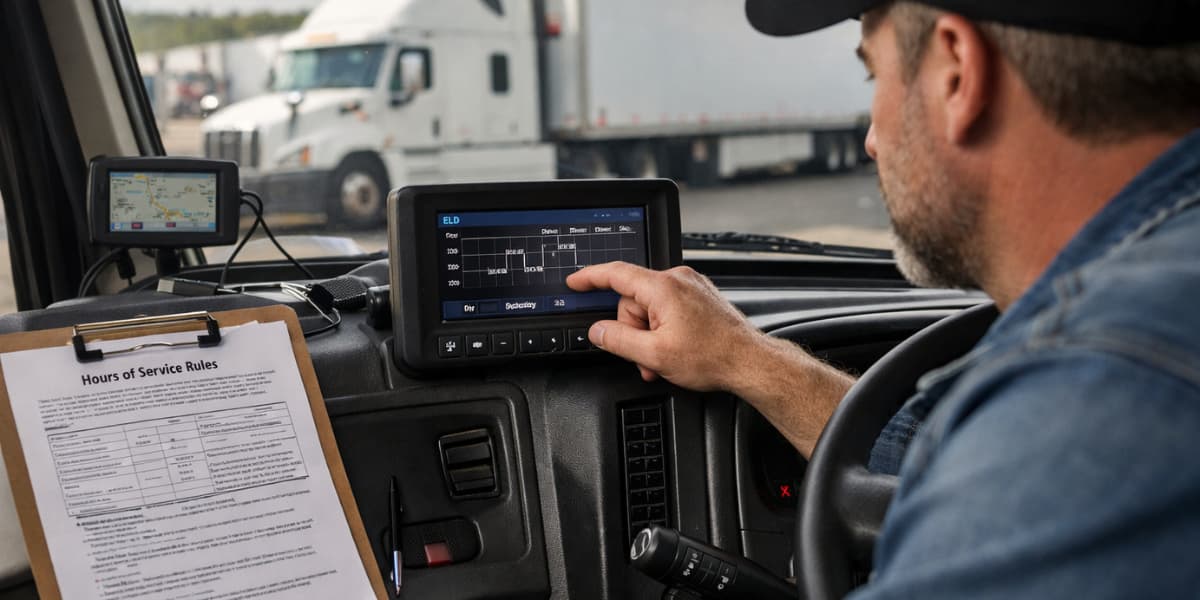
What Is the ELD Mandate?
An ELD mandate is a federal rule issued by the Federal Motor Carrier Safety Administration (FMCSA). Many commercial drivers who must maintain records of duty status are required to use an electronic logging device instead of paper logs.
The rule links Hours of Service compliance with digital recordkeeping. It also sets standards for ELD performance, certification, registration, and the supporting documents that drivers and carriers must retain.
From a practical standpoint, the mandate makes duty-status tracking more accurate and consistent. Standardized digital records replace handwritten logs and make reviews easier for both carriers and enforcement officials.
Why Was the ELD Mandate Introduced?
Road safety is the main reason the ELD mandate was introduced. Driver fatigue has long been a serious risk in commercial transportation, which is why hours-of-service rules already existed before ELDs came into the picture.
The problem was in how those hours were being recorded. Paper logs were slow to fill out, harder to review, and easier to change, which made it difficult for enforcement officers to consistently confirm whether drivers were following the rules.
To fix that gap, the ELD mandate required a more accurate way to record driving time. It legally began on December 18, 2017, full roadside enforcement started on April 1, 2018, and carriers using AOBRDs were given a transition period until December 16, 2019, while vehicles manufactured before model year 2000 remained exempt.
This change did not create new driving limits. Hours-of-service rules still define how long drivers can drive or work, while the ELD mandate only changed how qualifying drivers must record those hours.
Who Must Comply With the ELD Mandate?
Applicability should be framed through recordkeeping responsibility, not through guesswork based on vehicle type. The rule primarily applies to drivers who are required to maintain records of duty status under hours-of-service regulations.
Truck drivers
Long-haul and other commercial truck drivers often fall within the mandate because their operations require formal duty records. Presence of a truck alone does not trigger the rule, but many trucking operations do meet the underlying recordkeeping threshold.
Bus operators
Passenger carriers are part of the compliance picture as well. Commercial bus drivers may need ELDs when their work requires records of duty status under the same broader federal framework.
Owner-operators
Independent status does not remove a driver from the rule. Owner-operators must look at their logging obligations, not their business structure, to determine whether the mandate applies.
Cross-border drivers
Canadian and Mexican drivers operating in situations covered by the rule may also fall within the ELD requirement. Compliance, in other words, reaches beyond a narrow domestic-only understanding.
One principle should stay clear from beginning to end: obligation is recordkeeping-based. Many articles oversimplify the issue by saying the mandate applies to truckers. A more accurate explanation is that it applies to many drivers and carriers who must maintain records of duty status.
What Are the Main ELD Mandate Requirements?
Compliance becomes much clearer when broken into a structured checklist. Each requirement below represents a core component of staying aligned with FMCSA expectations.
1. Use a compliant electronic logging device
Compliance begins with selecting a device that meets FMCSA technical specifications. Not every GPS tracker or fleet app qualifies as an ELD, even if it records vehicle movement. Compliant system must be designed specifically for regulated hours-of-service tracking and duty record generation.
2. Confirm registration status
Device selection must go beyond features and pricing. Carriers need to verify that the ELD appears on the FMCSA’s registered device list. Since manufacturers self-certify their devices, registration should be treated as a baseline requirement rather than a guarantee of quality. Ongoing monitoring is also important because device status can change over time.
3. Maintain onboard documentation
Proper documentation plays a direct role during inspections. Drivers must have access to user manuals, data transfer instructions, malfunction procedures, and sufficient blank graph grids for temporary manual logging. Missing documents can lead to compliance issues even when the device itself is functioning correctly.
4. Ensure inspection readiness
Compliant setup must allow duty records to be displayed or transferred during roadside inspections. Enforcement officers rely on standardized access to this data, so the system should support clear viewing and reliable sharing without delays or confusion.
5. Follow malfunction procedures correctly
Device malfunctions do not pause compliance obligations. Drivers must switch to manual recordkeeping when needed, and carriers must repair or replace the device within the allowed timeframe. A structured response plan ensures continuity of records and reduces the risk of violations during system failures.
What Are the ELD Mandate Exemptions?
Exemptions need precision, not padding. Each one should answer three questions: what the exemption covers, why it exists, and when it actually applies.
Short-haul drivers
Short-haul treatment exists because some operations function under different recordkeeping conditions than long-haul routes. Where those underlying conditions remove the need for standard records of duty status, the ELD requirement may not apply in the same way.
Boundaries matter, though. Once a driver moves outside the limits of the qualifying short-haul framework, the exemption may no longer hold. Businesses should avoid treating short-haul status as permanent when it can depend on daily operations.
8 days in any 30-day period
Occasional log users may qualify for an exception when records of duty status are required no more than 8 days in any 30-day period. So the carve-out exists to prevent low-frequency logging situations from being treated like full-time ELD operations.
Relevance is highest for mixed-use businesses and irregular duty patterns. Fleet with occasional recordkeeping needs should evaluate actual usage rather than assume it must adopt a permanent ELD setup for every vehicle.
Pre-2000 vehicles
Vehicle age matters when the engine model year reaches 2000 or older. Compatibility and integration realities explain why this exemption continues to matter in older equipment environments.
Verification still matters. Fleets should confirm vehicle and engine details carefully instead of relying on general assumptions about age or model line.
Driveaway-towaway operations
Driveaway-towaway operations differ from ordinary freight movement because the vehicle being driven is the commodity being delivered. Regulatory treatment reflects that operational difference.
Narrow scope makes this exemption easy to misuse when teams rely on shorthand explanations. Clear documentation of the operation type is often essential for avoiding confusion.
Strong exemption analysis should do one thing above all: remove casual assumptions. Many compliance mistakes begin not with intentional disregard, but with broad interpretations of a narrow exception.
How to Choose an ELD-Compliant Solution
After understanding the legal framework, fleets need a solution that supports both compliance and routine operations. In 2026, registry status should be the first filter before evaluating any other product feature.
What to look for in an ELD-compliant solution:
- Current FMCSA registration: Verify that the exact model appears on the registered, self-certified ELD list today. Carriers using a device not on the list could be cited.
- Supported transfer methods: Confirm that the device supports the required transfer workflow your operation needs, such as email, web services, USB, or Bluetooth.
- Driver usability: Guidance emphasizes that drivers should know how to record, edit, certify, and transfer logs, so ease of use directly affects compliance.
- Malfunction support: Reliable vendor assistance matters because the rule provides only a limited remedy window when device issues occur.
- Inspection readiness: Strong systems make it easier to produce logs, keep required instructions accessible, and maintain consistency across the fleet.
An effective ELD solution should remove operational friction rather than add to it. Best-fit compliance technology is the kind drivers can use correctly during everyday operations and under inspection pressure.
Final Thoughts
ELD mandate content only works when the topic unfolds in the right order. Legal definition comes first, regulatory purpose follows, operational process explains the device, applicability clarifies who is covered, requirements show how compliance works, and exemptions narrow the rule where appropriate.
Strong understanding grows from that sequence because each section depends on the one before it. Readers do not just need a definition of the mandate. They need a full picture of why it exists, how it functions, who must follow it, and what separates compliant use from careless implementation.
Clear compliance usually comes from disciplined basics rather than complicated strategy. Right interpretation, right device, right documents, and right operational habits do more for a fleet than superficial familiarity with the term ELD.